
The Hunting Wives
A Review from the Female Gaze

Content Note: This review discusses adult themes, including sexuality and relationships.
I’ll start with this: I didn’t read the book. I went straight into the show, and maybe that’s why it hit me harder than I expected. The Hunting Wives is messy, intoxicating, and more than a little dangerous. It’s about privilege, lust, betrayal, and the kind of magnetic chaos that makes you want to look away, yet you don’t. You can’t.
From the very first episode, the series makes it clear: this is not a neat morality tale. This is temptation dressed in pearls and lipstick, with consequences hiding just out of sight.
Desire Through the Female Gaze
What makes The Hunting Wives stand out is how it’s filmed. This is not the male gaze, where women are flattened into props. It’s the female gaze: messy, sensual, complicated.
I even spoke with a few heterosexual women about the show, and many admitted they didn’t quite understand why they were so drawn to it. Why it felt so different. Why they loved scenes that, in another context, might have felt exploitative.
And my answer was simple: because this time, it’s for us.
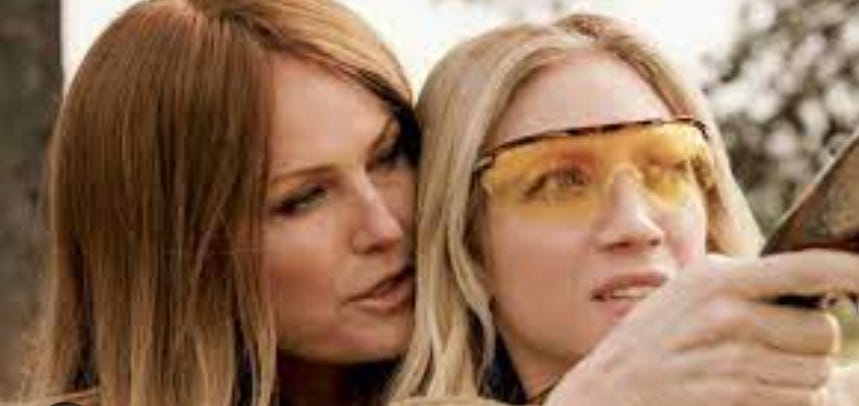
The camera doesn’t leer; it lingers. It pays attention to the touches, the glances, the jealousy simmering under the surface. It was beautiful to see women with women, shown in ways that felt sensual and attractive without being staged for someone else’s fantasy. The lead-ups were just as powerful as the acts themselves: a hand brushing against a shoulder, a look held too long, a moment of silence charged with longing.
What We Mean by The Female Gaze
The “female gaze” is often described as the counterpart to the “male gaze,” but it isn’t just about flipping who’s behind the camera.
The male gaze tends to objectify, breaking women down into parts or presenting them as idealized fantasies meant to appeal to men.
The female gaze focuses on how women experience desire. It lingers on emotion, tension, anticipation, and power dynamics. It asks, “What do women notice? What do women feel?”
In The Hunting Wives, you see this clearly. The intimacy between women is filmed with attention to the little things: the brush of a hand, a jealous look, the pause before a kiss. The queen bee’s allure isn’t just about her looks but about her charisma, privilege, and power over the group.
The female gaze makes the story feel different. Less about performance for an outside audience, and more about what it means to be inside those moments.
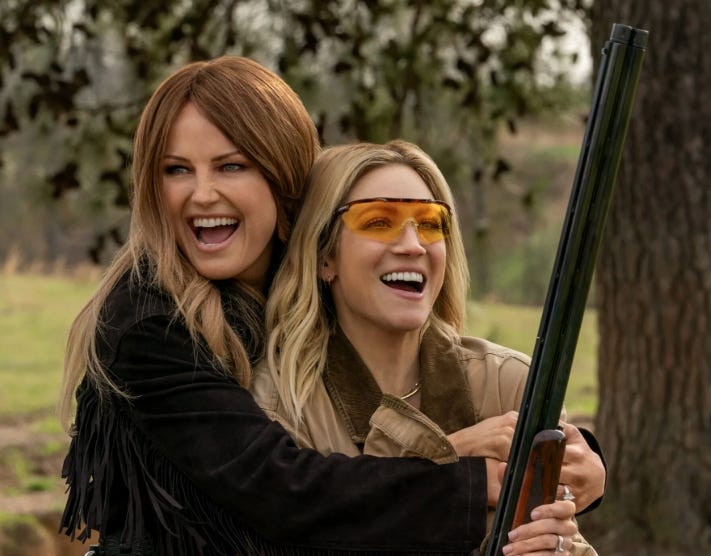
But alongside that beauty came something jarring. These women also sleep with much younger men. Those scenes pulled me right out of the story, to the point where I wanted to turn my TV off. The dissonance between the sensual intimacy of the women together and the recklessness of those choices made the viewing experience equal parts addictive and uneasy.
The Queen Bee
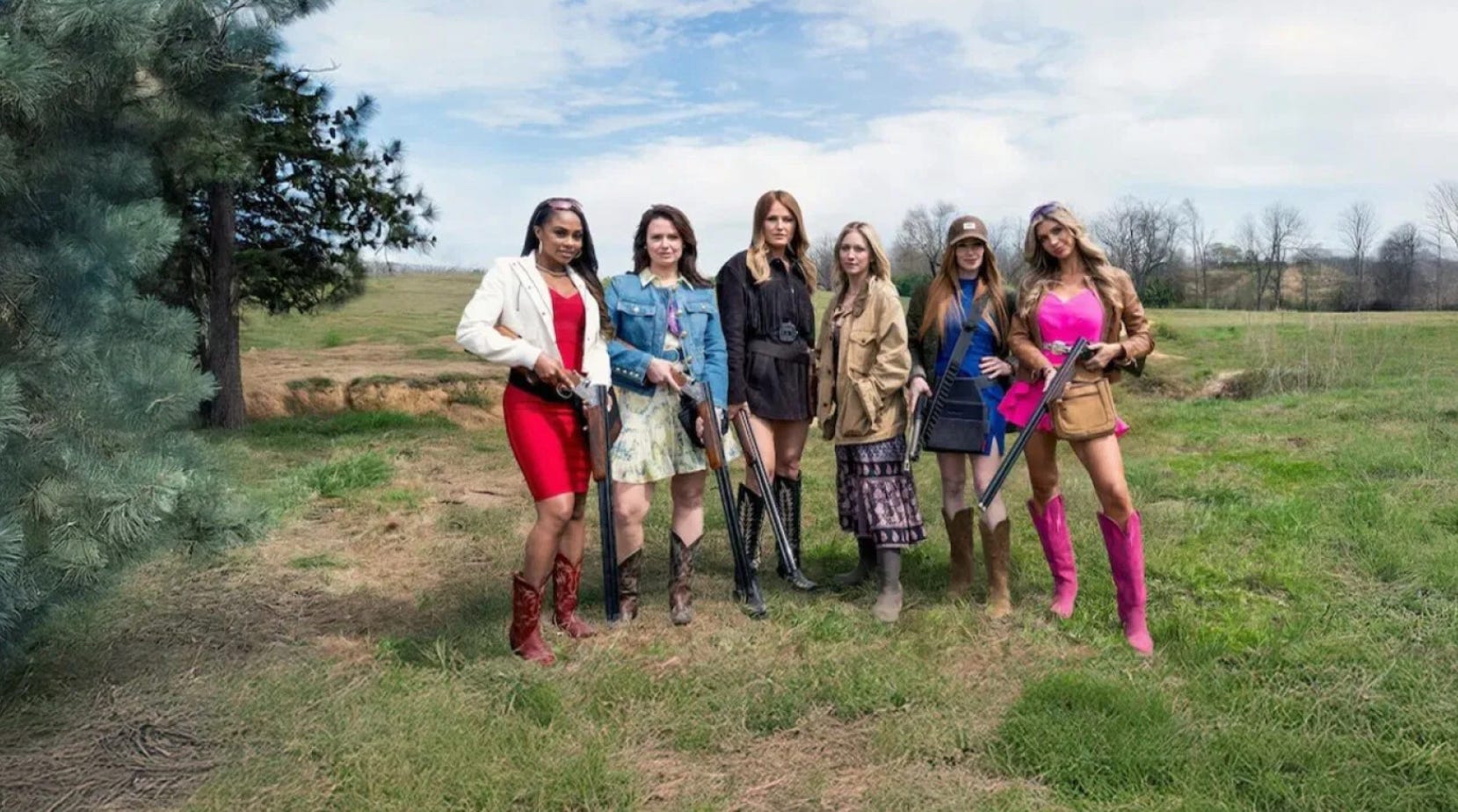
Of course, every intoxicating world has a queen, and here she is the woman who pulls everyone into her orbit. The queen bee of the town is magnetic in the most dangerous way. She commands attention, not by force, but by seduction. Every woman wants to be her or be chosen by her. Every man wants to orbit her glow, even if it destroys them.
And that’s the trick of The Hunting Wives. It shows how someone like her can hold absolute sway, not because she is kind or trustworthy, but because her allure makes people forget their better judgment. Her attraction isn’t just physical; it’s power. It’s privilege. It’s the promise of belonging.
Which brings me back to the main character, and why she never stood a chance.
A Desperate Outsider
From the start, you can tell the main character doesn’t fit into this glossy, privileged world. That awkwardness bleeds into her marriage. Her husband feels it too, especially in the beginning. It’s like he knows she’s reaching for something beyond their family, something neither of them can name.
That desperation, to belong, to be chosen, to be seen, drives her deeper into the Hunting Wives’ world. And it makes her easy prey. The queen bee and her circle spot that craving instantly. They dangle attention, exclusivity, and danger in front of her, and she takes the bait every time.
As a viewer, it’s frustrating. You want to shake her and say, “Don’t you see what’s happening?” But she doesn’t. And that disconnect creates a different kind of tension: secondhand embarrassment. By the final episode, when the police arrive, I was squirming so badly I literally turned off the television. Watching her run headfirst into disaster was like watching a slow-motion car crash.
Family as an Afterthought
What made her downfall even sharper was how the show handled her family. I kept forgetting she even had a child. Every time her kid appeared on screen, it startled me, like the story was reminding us: oh right, she has responsibilities outside of this chaos.
But that’s the point, isn’t it? She forgot too. The town women, the secrets, the parties, the affairs, they consumed her to the point where her home life became invisible. And as a viewer, that made me complicit. I forgot right alongside her, which made the reminder sting even more.
The Female Gaze in Film: Still Rare
The Hunting Wives is one of only a handful of stories shaped through the female gaze. They are few and far between.
Films like Wonder Woman (2017), Portrait of a Lady on Fire, The Woman King, The Lost Daughter, and even The 355 show how different stories can feel when women’s perspectives, desires, and complexities are at the center. Each one, in its own way, reminds us what’s possible when women aren’t flattened into objects or side characters, but given the full weight of messy humanity.
It’s worth noting that female gaze doesn’t always mean female director, but more often than not, that’s where the shift begins. Which is why when we do get stories like The Hunting Wives, they feel both familiar and radical at the same time.
Why It Works
This is why The Hunting Wives is so addictive. It doesn’t just show desire; it shows the consequences of it. It doesn’t flatten women into one-dimensional warnings; it allows them to be messy, selfish, magnetic, and destructive.
The gaze: It reframes pleasure and attraction through women’s eyes.
The chaos: Wealth, secrecy, and risk are turned into a guilty pleasure you don’t want to quit.
The casual admittance to racism: Offhand comments and quiet exclusions remind you that privilege always has an ugly edge.
The honesty: The story never apologizes for its characters. It simply says: this is how it feels, this is why it pulls you in.
Final Thoughts
The Hunting Wives isn’t a comfortable show. It isn’t tidy, and it isn’t easy. But that’s why it works.
It gives us women who are complicated and contradictory, who make terrible choices and thrilling ones, who let desire lead them down paths they can’t return from. It lets us sit with the discomfort of watching someone unravel while still being seduced by the world that unravels her.
And maybe that’s the point. Sometimes the mess is exactly what we’ve been missing.
Thank you for reading! If you enjoyed this review, please consider supporting my work:
Subscribe: Monthly or annual subscriptions help me keep writing and sharing more stories, reviews, and reflections.
Donate: If a subscription isn’t possible, a one-time contribution to the “treat jar” (tip jar) is just as appreciated. Every bit helps keep this work going.